
Humanities Division
Relevant Links
The Humanities Division is one of four academic divisions in the University of Oxford, bringing together the faculties of Classics; English; History; Linguistics, Philology and Phonetics; Medieval and Modern Languages; Music; Oriental Studies; Philosophy; and Theology, as well as the Ruskin School of Drawing and Fine Art.
The Division offers world-class teaching and research, backed by the superb resources of the University’s libraries and museums, including the famous Bodleian Library, with its 11 million volumes and priceless early book and manuscript collections, and the Ashmolean Museum of Art and Archaeology. Such historic resources are linked to cutting-edge agendas in research and teaching, with an increasing emphasis on interdisciplinary study. Our faculties are among the largest in the world, enabling Oxford to offer an education in Arts and Humanities unparalleled in its range of subjects, from music and fine art to ancient and modern languages.
Series associated with Humanities Division


























| # | Episode Title | Description | People | Date | |
|---|---|---|---|---|---|
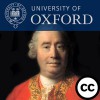
| 120 | Creative Commons | 2.6 David Hume | Part 2.6. Introduces 18th Century Scottish philosopher David Hume, 'The Great Infidel', including his life, works and a brief look at his philosophical thoughts. | Peter Millican | 16 Mar 2010 |
| 119 | Creative Commons | 2.5 Nicolas Malebranche and George Berkeley | Part 2.5. Focuses on Malebranche, a lesser-known French Philosopher, and his ideas on idealism and the influence they had on English philosopher George Berkeley. | Peter Millican | 16 Mar 2010 |
| 118 | Creative Commons | 2.4 John Locke | Part 2.4. Introduction to the philosophy of John Locke, 'England's first Empiricist', he also gives a very simplistic definition of Empiricism; we obtain knowledge through experience of the world, through sensory data (what we see, hear, etc). | Peter Millican | 16 Mar 2010 |
| 117 | Creative Commons | 2.3 Robert Boyle and Isaac Newton | Part 2.3. An introduction to Robert Boyle's theory of corpuscularianism and Isaac Newton's ideas on mathematics and the universe. | Peter Millican | 16 Mar 2010 |
| 116 | Creative Commons | 2.2 Thomas Hobbes: The Monster of Malmesbury | Part 2.2. A brief introduction to Thomas Hobbes, 'The Monster of Malmsbury', his views on a mechanistic universe, his strong ideas on determinism and his pessimistic view of human nature: 'The life of man is solitary, poor, nasty, brutish and short'. | Peter Millican | 16 Mar 2010 |
| 115 | Creative Commons | 2.1 Recap of General Philosophy Lecture 1 | Part 2.1. A brief recap on the first lecture describing how Aristotle's view of the universe, dominant throughout the middle ages in Europe, came to be gradually phased out by a modern, mechanistic view of the universe. | Peter Millican | 16 Mar 2010 |
| 114 | Creative Commons | Treasures of Oxford - Athenian Wine Drinking Cup | Sir John Boardman talks about a wine drinking cup made in Ancient Athens; he also talks about what we can learn from it about Ancient Greek culture and the kind of lifestyle the Greeks had. | John Boardman | 11 Mar 2010 |
| 113 | Creative Commons | Introduction to Art of the Ancient World | Donna Kurtz and Sir John Boardman talk about Sir John's life, his career and experiences as a classical scholar and also the relationship works of art from different cultures around the ancient world have with one another. | John Boardman, Donna Kurtz | 11 Mar 2010 |
| 112 | Creative Commons | Research in Classical Archaeology | Discussion between Sir John Boardman and Donna Kurtz on the subject of being classical archaeology researchers and academics and some of the challenges and opportunities they face. | John Boardman, Donna Kurtz | 11 Mar 2010 |
| 111 | Standing Neustadt on his Head: The Leadership Style of Dwight D. Eisenhower | Fred L. Greenstein (Professor of Politics Emeritus, Princeton University) delivers the 2010 John Lees Memorial Lecture at the American Politics Group conference. | Fred Greenstein | 05 Mar 2010 | |
| 110 | Unfit for Life: Genetically Enhance Humanity of Face Extinction | A St Cross Special Ethics Seminar - If we are to avoid annihilation, we must either alter our political institutions, severely restrain our technology or change our nature (22 February 2010). | Julian Savulescu | 03 Mar 2010 | |
| 109 | Creative Commons | Cornelia Sorabji: Jowett's protégée in Oxford 1889-1893 | Professor Richard Sorabji (Wolfson College, Oxford) - Cornelia Sorabji: Jowett's protígíe in Oxford 1889-1893. | Richard Sorabji | 03 Mar 2010 |
| 108 | Creative Commons | Repainting Ajanta: the global impact of the Frescoes and their copies | Dr Rupert Arrowsmith (UCL) - 'Repainting Ajanta: the global impact of the Frescoes and their copies.'. | Rupert Arrowsmith | 03 Mar 2010 |
| 107 | Creative Commons | Tracing Indian students at Oxford before the Second World War | Dr Sumita Mukherjee (Oxford) - 'Tracing Indian Students at Oxford before the Second World War'. | Sumita Mukherjee | 02 Mar 2010 |
| 106 | Creative Commons | Indian imperial crossings and the Oxford hub | Professor Elleke Boehmer (Oxford) - 'Indian imperial crossings and the Oxford hub'. | Elleke Boehmer | 02 Mar 2010 |
| 105 | Creative Commons | Michael Madhusudan Datta (1824-1873): a young Bengali poet's exam script washes up on Albion's distant shore | Dr Alex Riddiford - "Michael Madhusudan Datta (1824-1873): a young Bengali poet's exam script washes up on Albion's distant shore." This reading was delivered by Anshuman Mondal. | Alex Riddiford, Anshuman Mondal | 02 Mar 2010 |
| 104 | Creative Commons | Musings of Sir Mohammad Iqbal on the Place of Muslims in late Colonial India: Letters to Edward John Thompson, 1933-1934 | Professor Humayun Ansari (RHUL) - 'Musings of Sir Mohammad Iqbal on the Place of Muslims in late Colonial India: Letters to Edward John Thompson, 1933-1934'. | Humayun Ansari | 02 Mar 2010 |
| 103 | Creative Commons | Introduction and Reading | Opening of exhibition by Amitav Ghosh and a reading from his In an Antique Land. Introduced by Anshuman Mondal (Brunel). | Amitav Ghosh, Anshuman Mondal | 02 Mar 2010 |
| 102 | La Bella Principessa - who was the eponymous princess? | Martin Kemp discusses 'La Bella Principessa', a profile portrait of a Milanese lady, a newly rediscovered work by Leonardo Da Vinci. He discusses the painting's subject, the Viennese princess and the possible identity of the eponymous princess. | Martin Kemp, Kathryn Barush, Maya Corry | 01 Mar 2010 | |
| 101 | Verifying La Bella Principessa - The science behind the art | Martin Kemp discusses 'La Bella Principessa', a profile portrait of a Milanese lady, a newly rediscovered work by Leonardo Da Vinci. In this podcast, Martin Kemp discusses the science of verifying the painting as a genuine Leonardo painting. | Martin Kemp, Kathryn Barush, Maya Corry | 01 Mar 2010 | |
| 100 | What makes La Bella Principessa a genuine Leonardo Da Vinci portrait? | Martin Kemp discusses 'La Bella Principessa', a profile portrait of a Milanese lady, a newly rediscovered work by Leonardo Da Vinci. In this podcast, Martin Kemp discusses some of the characteristics of the painting that make it a Leonardo. | Martin Kemp, Kathryn Barush, Maya Corry | 01 Mar 2010 | |
| 99 | Discovering 'La Bella Principessa' | Martin Kemp discusses 'La Bella Principessa', a profile portrait of a Milanese lady, a newly rediscovered work by Leonardo Da Vinci. In this podcast, Martin Kemp discusses the discovery of the painting itself and how he felt at the time. | Martin Kemp, Kathryn Barush, Maya Corry | 01 Mar 2010 | |
| 98 | A Leonardo Discovered. La Bella Principessa. Discussion with Martin Kemp | Martin Kemp discusses 'La Bella Principessa', a profile portrait of a Milanese lady, a newly rediscovered work by Leonardo Da Vinci Martin is interviewed by Kathryn Barush and Maya Corry. | Martin Kemp, Kathryn Barush, Maya Corry | 01 Mar 2010 | |
| 97 | Creative Commons | Is Tragedy still Alive? | Discussion on whether tragedy still exists in modern culture, whether in films, modern theatre or and other creative arts. | Oliver Taplin, Joshua Billings | 01 Mar 2010 |
| 96 | Creative Commons | Does Tragedy Teach? | Third dialogue on the nature of tragedy where they talk about whether tragic theatre teaches people, and if it does, how and what does it teach? | Oliver Taplin, Joshua Billings | 01 Mar 2010 |
| 95 | Creative Commons | What does Tragedy do for People? | A discussion of what the use of tragedy is, and whether the emotional experience of tragic theatre is simply a passing thrill or a vital part of life. | Oliver Taplin, Joshua Billings | 01 Mar 2010 |
| 94 | Creative Commons | Defining Tragedy | First dialogue between Oliver Taplin and Joshua Billings on tragedy: they discuss what 'tragedy' means, from its origins in Greek culture to philosophical notions of what tragedy and tragic drama are. | Oliver Taplin, Joshua Billings | 01 Mar 2010 |
| 93 | Creative Commons | 1.4 From Galileo to Descartes | Part 1.4. Outlines Galileo's revolutionary theories of astronomy and mechanical science and introduces Descartes' (the father of modern philosophy) ideas of philosophical scepticism. | Peter Millican | 19 Feb 2010 |
| 92 | Creative Commons | General Philosophy Lecture 1 | PDF slides from Peter Millican's General Philosophy lecture 1. | Peter Millican | 19 Feb 2010 |
| 91 | Creative Commons | 1.3 Science from Aristotle to Galileo | Part 1.3. Describes briefly the Aristotelian view of the universe; the basis for natural science in Europe until the 15th century and its conflict Galileo's theories. | Peter Millican | 19 Feb 2010 |
| 90 | Creative Commons | 1.2 The Background of Early Modern Philosophy | Part 1.2. Gives a very brief history of philosophy from the 'birth of philosophy' in Ancient Greece through the rise of Christianity in Europe in the Middle Ages through to the Renaissance, the Reformation and the birth of the Modern Period. | Peter Millican | 19 Feb 2010 |
| 89 | Creative Commons | 1.1 An Introduction to General Philosophy | Part 1.1. Outlines the General Philosophy course, the various topics that will be discussed, and also, more importantly, the philosophical method that this course introduces to students. | Peter Millican | 19 Feb 2010 |
| 88 | Creative Commons | Adapting Greek Tragedy | Fiona Macintosh talks with distinguished playwright Frank McGuinness about his work in adapting Greek tragedies for modern theatre, particularly Antigone and The Medea. | Fiona Macintosh, Frank McGuinness | 28 Jan 2010 |
| 87 | Round table discussion of Clarice Lispector (Brazilian-Portugese) | Discussion and audience questions (in Brazilian-Portugese) about Clarice Lispector's film De Corpo Inteiro and her reception at home and abroad. | Nicole Algranti, Teresa Montero Ferreira, Claire Williams | 25 Jan 2010 | |
| 86 | Creative Commons | Censorship in South Africa: Introduction | Peter McDonald talks briefly about what first interested him in Censorship of Literature in South Africa. | Peter McDonald | 12 Jan 2010 |
| 85 | Creative Commons | Peter McDonald on Censorship in South Africa | Peter McDonald talks with Oliver Lewis about censorship, its philosophical basis and general history within Apartheid South Africa. | Peter McDonald, Oliver Lewis | 12 Jan 2010 |
| 84 | Nietzsche Source. Scholarly Nietzsche editions on the web | Introduction to the scholarly editions of Nietzsche Source: the digital critical edition based on Colli/Montinary, the digital edition of the Nietzsche estate including works, manuscripts and letters and the future genetic edition of Nietzsche's works. | Paolo D’Iorio | 23 Dec 2009 | |
| 83 | Nietzsche's Value Monism - Saying Yes to Everything | Lecture on Nietzsche's attack on Value Dualism, as well as the view he offers instead and whether Nietzsche can sustain his Value Monism-the view that everything is good-given the pressures that pull him back into saying no as well as yes. | John Richardson | 23 Dec 2009 | |
| 82 | Nietzsche's Metaphysics | Nietzsche rejects a persisting self; real distinctions of objects and properties, categorical and dispositional properties, causes and effects; free will. He holds that determinism is true, reality is one and fundamentally experiential. | Galen Strawson | 22 Dec 2009 | |
| 81 | Consciousness, Language and Nature: Nietzsche's Philosophy of Mind and Nature | On the triangulation between consciousness, language and nature in Nietzsche's philosophy and contemporary philosophy of mind and proposes a philosophy of signs and interpretation as a basis for a philosophy of mind, language and nature. | Gunter Abel | 22 Dec 2009 | |
| 80 | Who is the 'Sovereign Individual?' Nietzsche on Freedom | Nietzsche's Sovereign Individual (SI) argues that 1. Nietzsche denies free will and moral responsibility. 2. SI in no way supports a denial of 1. 3. Nietzsche engages in a 'persuasive definition' of the language of Freedom and Free Will. | Brian Leiter | 22 Dec 2009 | |
| 79 | Nietzsche on Soul in Nature | This keynote speech examines if, according to Nietzsche, experience of nature is inevitably conditioned by some archetypal phantasm or cultural construction process or if unmediated apprehension of nature is possible. | Graham Parkes | 22 Dec 2009 | |
| 78 | The Genealogy of Guilt | Nietzsche's objective is not to challenge the Christian non-naturalistic account of guilt but to show that Christian representation of guilt is a product of the exploitation of human susceptibility to guilt as instrument of self-directed cruelty. | Bernard Reginster | 22 Dec 2009 | |
| 77 | He's got the whole world in his hands: US History and its discontents in the Obama Era | Robin Kelley's inaugral lecture comments on the absence of discussion about race as connected to Barak Obama's presidency, particularly in light of American history and politics. | Robin D Kelley | 01 Dec 2009 | |
| 76 | Creative Commons | The Duchess of Malfi | The Duchess of Malfi / Webster, John, 1580?-1625. This is the epub edition of the play. | John Webster | 24 Nov 2009 |
| 75 | Creative Commons | The Duchess of Malfi: John Webster | In dramatizing a woman's sexual choices in a notably sympathetic manner, this tragedy articulates perennial questions about female autonomy and class distinction. | Emma Smith | 24 Nov 2009 |
| 74 | Creative Commons | Political Perspectives to State Censorship of Literature | Peter McDonald and David Robertson discuss the idea of state censorship, especially Apartheid era South Africa, looking at the political perspectives and implications of state censorship of literature. | Peter McDonald, David Robertson | 17 Nov 2009 |
| 73 | Creative Commons | Literature and State Censorship: A literary perspective | Peter McDonald and Elleke Bohemer discuss state censorship from a literary perspective; also discussing the issues of nationalism, modernism and Apartheid. | Peter McDonald, Elleke Boehmer | 17 Nov 2009 |
| 72 | Creative Commons | Legal issues in state censorship | Peter McDonald and Liora Lazarus discuss the legal issues of state censorship especially in Apartheid era South Africa. | Peter McDonald, Liora Lazarus | 17 Nov 2009 |
| 71 | Creative Commons | The Roaring Girl or Moll Cutpurse | The Roaring Girl or Moll Cutpurse / Thomas Dekker and Thomas Middleton. This is the epub edition of the play. | Thomas Middleton, Thomas Dekker | 13 Nov 2009 |
| 70 | Creative Commons | The Roaring Girl: Thomas Middleton and Thomas Dekker | Based on a contemporary scandal of a woman who dressed in male clothing, this play of topsy-turvy genders has fun with some very modern ideas about sexuality, identity and whether we are what we wear. | Emma Smith | 13 Nov 2009 |
| 69 | Creative Commons | The revenger's tragedy | The revenger's tragedy / Middleton, Thomas, 1580-1627. This is the epub edition of the play. | Thomas Middleton | 06 Nov 2009 |
| 68 | Creative Commons | The Revenger's Tragedy: Thomas Middleton | A blackly camp tragedy - Hamlet without the narcissism - set in a court corrupted by lust and self-interest, this play is both fascinated and repelled by its own depravity. | Emma Smith | 06 Nov 2009 |
| 67 | Creative Commons | The Shoemaker's Holiday: Thomas Dekker | Like a Busby Berkeley depression-era musical, Dekker's comedy is a feel-good antidote to a context of shortages, political malaise and general pessimism, but real life in the shape of war, class antagonism and civic tensions, always threatens to intrude. | Emma Smith | 06 Nov 2009 |
| 66 | Creative Commons | The shoemaker's holiday | The shoemakers' holiday / Dekker, Thomas, ca. 1572-1632. This is the epub version of the play. | Thomas Dekker | 05 Nov 2009 |
| 65 | Creative Commons | Arden of Feversham | Arden of Feversham / Unknown. This is the epub edition of the play. | Anonymous | 05 Nov 2009 |
| 64 | Creative Commons | Arden of Faversham: Anon | A true crime story of the murder of Thomas Arden by his wife and her lover, this play is concerned with the politics of the household, with gender roles within marriage, and presents a black comedy of botched murder attempts rather like The Ladykillers. | Emma Smith | 05 Nov 2009 |
| 63 | Creative Commons | The Spanish tragedie | The Spanish tragedie / Kyd, Thomas, 1558-1594. This is the epub edition of the play. | Thomas Kyd | 05 Nov 2009 |
| 62 | Creative Commons | The Spanish Tragedy: Thomas Kyd | Popular tragedy in which Hieronimo pursues aristocratic murderers of his son Horatio and takes revenge. It speaks, like Hollywood Westerns, to questions about private revenge versus public justice, and to the vexed religious questions of its age. | Emma Smith | 05 Nov 2009 |
| 61 | Arthur Miller: Un-American (2009 Esmond Harmsworth Lecture) | The 2009 Esmond Harmsworth Lecture in American Arts and Letters, given on 21 May 2009 at the Rothermere American Institute, by Professor Christopher Bigsby, University of East Anglia. | Christopher Bigsby | 09 Oct 2009 | |
| 60 | The Flipside of Scientific Freedom | Scientists have always had to contend with the idea that their research may be misused. The problem, weighing scientific freedom of inquiry against the possibility that research could be used for harm, is known as the 'dual-use dilemma'. | Tom Douglas | 12 Aug 2009 | |
| 59 | Introduction to the 2009 Degree Show | Final Year students discuss the 2009 Ruskin Degree Show. | Oliver Beer, Jasmine Robinson, Andrew Gillespie | 27 Jul 2009 | |
| 58 | Oliver Beer | 2009 Ruskin Art School graduates Oliver Beer and Jasmine Robinson talk about Oliver Beer’s work at the Ruskin Degree show. | Oliver Beer, Jasmine Robinson | 27 Jul 2009 | |
| 57 | Andrew Gillespie | 2009 final year student Andrew Gillespie talks about his artwork with Oliver Beer and Jasmine Robinson at the Ruskin Degree Show. | Andrew Gillespie, Oliver Beer, Jasmine Robinson | 27 Jul 2009 | |
| 56 | Min-Young Kwon | 2009 final year student Min-Young Kwon talks about her artwork submitted for the Ruskin Degree Show. | Min-Young Kwon | 27 Jul 2009 | |
| 55 | Hannah Meszaros-Martin | 2009 Final year student Hannah Meszaros-Martin talks about her artwork submitted for the Ruskin Degree Show. | Hannah Mezsaros-Martin | 27 Jul 2009 | |
| 54 | Jasmine Robinson | 2009 Final year student Jasmine Robinson talks with other final year students Oliver Beer and Andrew Gillespie about her artwork submitted for the Ruskin Degree Show. | Jasmine Robinson, Oliver Beer, Andrew Gillespie | 27 Jul 2009 | |
| 53 | Natalia Rodionova | 2009 Final year student Natalia Rodionova talks about her artwork submitted for the 2009 Ruskin Degree Show and her work in general. | Natalia Rodionova | 27 Jul 2009 | |
| 52 | Emily Vicary | 2009 Final year student Emily Vicary talks about her artwork submitted for the 2009 Ruskin Degree Show. | Emily Vicary | 27 Jul 2009 | |
| 51 | Jacob Wolff | 2009 Final year student Jacob Wolff talks about his artwork submitted for the 2009 Ruskin Degree Show. | Jacob Wolff | 27 Jul 2009 | |
| 50 | Julian Savulescu's Monash Distinguished Alumni | Julian Savulescu and the other Monash Distinguished Alumni discuss how Monash University has influenced their careers. | Julian Savulescu | 30 Jun 2009 | |
| 49 | Russian Conversation: Part 2E | Russian Conversation: Part 2E. | Natalia Keys | 03 Jun 2009 | |
| 48 | Russian Conversation: Part 2D | Russian Conversation: Part 2D. | Natalia Keys | 03 Jun 2009 | |
| 47 | Russian Conversation: Part 2C | Russian Conversation: Part 2C. | Natalia Keys | 03 Jun 2009 | |
| 46 | Russian Conversation: Part 2B | Russian Conversation: Part 2B. | Natalia Keys | 03 Jun 2009 | |
| 45 | Russian Conversation: Part 2A | Russian Conversation: Part 2A. | Natalia Keys | 03 Jun 2009 | |
| 44 | Russian Conversation: Part 1E | Russian Conversation: Part 1E. | Natalia Keys | 03 Jun 2009 | |
| 43 | Russian Conversation: Part 1D | Russian Conversation: Part 1D. | Natalia Keys | 03 Jun 2009 | |
| 42 | Russian Conversation: Part 1C | Russian Conversation: Part 1C. | Natalia Keys | 03 Jun 2009 | |
| 41 | Russian Conversation: Part 1B | Russian Conversation: Part 1B. | Natalia Keys | 03 Jun 2009 | |
| 40 | Russian Conversation: Part 1A | Russian Conversation: Part 1A. | Natalia Keys | 03 Jun 2009 | |
| 39 | Reception of Classical Literature in the 20th Century | Dr Fiona Macintosh gives a lecture on the classical literature and its reception in the 20th Century. In particular, the Odyssey, the Medea and Oedipus Rex. Part of the OxBridge Classics Conference for Schools. | Fiona Macintosh | 22 Apr 2009 | |
| 38 | Roman Comedy: A funny thing happened... | Peter Brown gives his lecture on Roman Comedy. Part of the OxBridge Classics Conference for Schools lecture series. | Peter Brown | 22 Apr 2009 | |
| 37 | Oliver Taplin on Classics | Professor Oliver Taplin, an authority on classics and the performance of ancient drama, talks about the subject and his research. | Oliver Taplin, Oliver Lewis | 22 Apr 2009 | |
| 36 | Putting China in its Place in the History of Art | The inaugural lecture by Professor Craig Clunas. | Craig Clunas | 02 Dec 2008 | |
| 35 | Tolkien and Languages: Ancient and Invented | Interview with Dr Elizabeth Solopova from the Bodlian Library on the influence of medieval language on Tolkien's fiction. | Stuart Lee, Elizabeth Solopova | 01 Dec 2008 | |
| 34 | Tolkien and the Oxford English Dictionary: 'The Ring of Words' | A discussion with the authors of 'The Ring of Words', an exploration into Tolkien's work as a lexicographer for the Oxford English Dictionary. | Stuart Lee, Peter Gilliver, Jeremy Marshall, Edmund Weiner | 23 Oct 2008 | |
| 33 | Bryan Ward-Perkins on the Fall of the Roman Empire | Bryan Ward-Perkins, a leading historian of Late Antiquity at Trinity College, Oxford, discusses the transitional period between the fall of Rome and the Middle Ages. | Bryan Ward-Perkins, Oliver Lewis | 13 Sep 2008 | |
| 32 | Adrian Moore on Metaphysics | Adrian Moore, Professor of Philosophy at St Hugh’s College, Oxford, explores the definition and origin of metaphysics, and then discusses some of the enduring metaphysical questions. | Adrian Moore, Oliver Lewis | 12 Sep 2008 | |
| 31 | John Broome on Rationality | John Broome, White's Professor of Moral Philosophy at the University of Oxford, gives an explanation of reason and rationality, and then discusses his understanding of the 'the normative question'. | John Broome, Oliver Lewis | 12 Sep 2008 | |
| 30 | Nick Bostrom on Global Catastrophic Risk and Simulation Theory | In this podcast, Professor Bostrom, Director of the Future of Humanity Institute, discusses global catastrophic risks and his earlier work on the simulation theory. | Nick Bostrom, Oliver Lewis | 12 Sep 2008 | |
| 29 | Julian Savulescu on Applied Ethics and Human Enhancement | Professor Julian Savulescu, Director of the Oxford Uehiro Centre for Practical Ethics, talks about the current and future issues in applied ethics, particularly of the new biosciences. | Julian Savulescu, Oliver Lewis | 12 Sep 2008 | |
| 28 | Roger Crisp on Aristotle's Ethics | Roger Crisp, Uehiro Fellow and Tutor in Philosophy, discusses the ethics of Aristotle. | Roger Crisp, Oliver Lewis | 12 Sep 2008 | |
| 27 | Richard Wentworth in Conversation | Ruskin Master Richard Wentworth in conversation with 2008 graduates. | Richard Wentworth, Tiff Chan, Tom Hardiman, Helen Marten | 12 Sep 2008 | |
| 26 | Tom Hardiman | 2008 Graduates of the Oxford University Ruskin School of Art discuss their final year projects. | Tom Hardiman | 12 Sep 2008 | |
| 25 | Konstanty Czartoryski | 2008 Graduates of the Oxford University Ruskin School of Art discuss their final year projects. | Konstanty Czartoryski | 12 Sep 2008 | |
| 24 | Jon Aye | 2008 Graduates of the Oxford University Ruskin School of Art discuss their final year projects. | Jon Aye | 12 Sep 2008 | |
| 23 | Jim Allchin | 2008 Graduates of the Oxford University Ruskin School of Art discuss their final year projects. | Jim Allchin | 12 Sep 2008 | |
| 22 | Grace Exley | 2008 Graduates of the Oxford University Ruskin School of Art discuss their final year projects. | Grace Exley | 12 Sep 2008 | |
| 21 | Amy Jackson | 2008 Graduates of the Oxford University Ruskin School of Art discuss their final year projects. | Amy Jackson | 12 Sep 2008 |
- ‹ previous
- 28 of 29
- next ›