
Humanities Division
Relevant Links
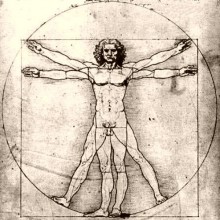
The Humanities Division is one of four academic divisions in the University of Oxford, bringing together the faculties of Classics; English; History; Linguistics, Philology and Phonetics; Medieval and Modern Languages; Music; Oriental Studies; Philosophy; and Theology, as well as the Ruskin School of Drawing and Fine Art.
The Division offers world-class teaching and research, backed by the superb resources of the University’s libraries and museums, including the famous Bodleian Library, with its 11 million volumes and priceless early book and manuscript collections, and the Ashmolean Museum of Art and Archaeology. Such historic resources are linked to cutting-edge agendas in research and teaching, with an increasing emphasis on interdisciplinary study. Our faculties are among the largest in the world, enabling Oxford to offer an education in Arts and Humanities unparalleled in its range of subjects, from music and fine art to ancient and modern languages.
Series associated with Humanities Division
































































| # | Episode Title | Description | People | Date | |
|---|---|---|---|---|---|
| 920 | Kafka's Cognitive Realism | An interdisciplinary discussion of Dr Emily Troscianko's book | Emily Troscianko, Sue Blackmore, Ritchie Robertson, James Carney | 26 Mar 2014 | |
| 919 | Nixon the President, Nixon the Man | Please note. The final 10 minutes to this podcast are Audio Only. We apologise for the inconvenience. | Alexander Butterfield, John Price | 25 Mar 2014 | |
| 918 | Activist Humanities in a Global Context | Ahadf Soueif, Paul Smith and Robin Kelley discuss how the humanities can solve global challenges | Ahdaf Soueif, Paul Smith, Robin Kelley | 19 Mar 2014 | |
| 917 | What Have the Humanities to Teach the Modern University? | Part of the Humanities and the Public Good series | Teresa Morgan, Stephen Whitefield, David Ford, Jonathan Phillips | 19 Mar 2014 | |
| 916 | Creative Commons | The History of Oxford University Press | Adam Smyth is joined by Professor Ian Gadd to discuss his just-published collection on the history of OUP. | Adam Smyth, Ian Gadd | 17 Mar 2014 |
| 915 | Creative Commons | Peter D McDonald in conversation with Daljit Nagra | Peter D. McDonald talks to the poet Daljit Nagra about cultural diversity, the contemporary life and history of the English language, the canons of English literature, and translation. | Peter McDonald, Daljit Nagra | 17 Mar 2014 |
| 914 | Science and the Humanities | Are the Humanities and the Sciences fundamentally different? Or do they share roots, values, aspirations and a common, contemporary predicament? | Howard Hotson, Ian Walmsley, Mark Pagel, Sally Shuttleworth | 04 Mar 2014 | |
| 913 | Where's the Virtue in the Humanities? | How can the Liberal Humanities own up to – and promote – its public service as a matrix of civic virtue? | Nigel Biggar, Donald Drakeman, Steven Biel, Jonathan Bate | 04 Mar 2014 | |
| 912 | Creative Commons | Careers Seminar 2014 - Collections Management in a Historic House | A careers event organised by Lucy Hawkins (Careers Service) and Rachel Woodruff, (History of Art Dept) with speakers from the Arts and Heritage sectors, including recent alumni of the Department, providing insights into their careers. | Emily Roy | 27 Feb 2014 |
| 911 | Creative Commons | Careers Seminar 2014 - Finding Yourself in Advertising | A careers event organised by Lucy Hawkins (Careers Service) and Rachel Woodruff, (History of Art Dept) with speakers from the Arts and Heritage sectors, including recent alumni of the Department, providing insights into their careers. | Elle Graham-Dixon | 27 Feb 2014 |
| 910 | Creative Commons | Careers Seminar 2014 - Introduction | A careers event organised by Lucy Hawkins (Careers Service) and Rachel Woodruff, (History of Art Dept) with speakers from the Arts and Heritage sectors, including recent alumni of the Department, providing insights into their careers. | Lucy Hawkins | 27 Feb 2014 |
| 909 | General Hayden, Lecture: "Terrorism and Islam's Civil War: Whither the Threat?" | Former Director of the National Security Agency and Central Intelligence Agency General Hayden gives a talk for the Humanitas visiting professorship in Intelligence Studies and Islamism | Michael Hayden | 25 Feb 2014 | |
| 908 | General Hayden, Lecture: "My Government, My Security and Me" | Former Director of the National Security Agency and Central Intelligence Agency General Hayden gives a talk for the Humanitas visiting professorship in Intelligence Studies | Michael Hayden | 25 Feb 2014 | |
| 907 | Creative Commons | Bibliography in Bits | Adam Smyth talks to Professor Will Noel about the potentials of digital technology for the study of manuscripts. | Will Noel, Adam Smyth | 23 Feb 2014 |
| 906 | Creative Commons | How to Be Publishable: Graduate Training Seminar | A crash course in how to get published, from approaching the writing process to marketing your ideas. Dr. Eugene Rogan discusses the ins and outs of academic and trade publishing with insights for students at the graduate level and beyond. | Eugene Rogan | 20 Feb 2014 |
| 905 | Creative Commons | Doing Away With Dispositions: Towards a Law-Based Account of Modality in Science | Stephen French (Leeds) gives a talk for the Power Structuralism in Ancient Ontologies series. | Stephen French | 18 Feb 2014 |
| 904 | Creative Commons | Quidditism and Modal Methodology | Alastair Wilson, Birmingham, gives a talk for the Power Structuralism in Ancient Ontologies series | Alastair Wilson | 18 Feb 2014 |
| 903 | Creative Commons | The Fundamentality of the Familiar | Nick Jones, University of Birmingham, gives a talk in which he appeal to an examination of the explanatory role of ordinary macroscopic objects to argue that some of them are metaphysically fundamental. | Nick Jones | 18 Feb 2014 |
| 902 | Creative Commons | Aristotle's Dynamics in Physics VII 5: the Importance of Being Conditional | Henry Mendell (California State) gives a talk for the Power Structualism in Ancient Ontologies series | Henry Mendell | 18 Feb 2014 |
| 901 | Creative Commons | Aristotle on the Happiness of the City | Don Morison (Rice) gives a talk for the Power Structualism in Ancient Ontology series. | Don Morison | 18 Feb 2014 |
| 900 | Creative Commons | Pluralism and Determinism | Thomas Sattig (Tübingen) gives a talk for the Power Structualism in Ancient Ontologies series. | Thomas Sattig | 18 Feb 2014 |
| 899 | Creative Commons | Inclination and the Modality of Dispositions | Mark Sinclair (Manchester Metropolitan) gives a talk for the Power Structualism in Ancient Ontologies series | Mark Sinclair | 18 Feb 2014 |
| 898 | Creative Commons | Can We Make Sense of Metaphysical Knowledge? | Claudine Tiercelin (Collège de France) gives a talk for the Power Structuralism in Ancient Ontologies series. | Claudine Tiercelin | 18 Feb 2014 |
| 897 | Stilpo of Megara and the Uses of Argument | Nick Denyer (Cambridge) gives a talk for the Power Structuralism in Ancient Ontologies podcast series | Nick Denyer | 13 Feb 2014 | |
| 896 | Marcus Aurelius' Meditations: How Stoic are They? | Christopher Gill (Exeter) gives a talk on Marcus Aurelius' Meditations and asks How Stoic are They? | Christopher GIll | 13 Feb 2014 | |
| 895 | Creative Commons | Moral Development and Self-Knowledge in Aristotle | Steve Makin, (Sheffield) gives a talk for the Power Structualism in Ancient Ontologies podcast series | Steve Makin | 13 Feb 2014 |
| 894 | Creative Commons | Freedom and Responsibility Revisited | Richard Sorabji gives a talk for the Power Structuralism in Ancient Ontolgies podcast series | Richard Sorabji | 13 Feb 2014 |
| 893 | Creative Commons | African Knowledge and Livestock Health | Book at Lunchtime interview with Karen Brown and William Beinart about their book “African Knowledge and Livestock Health” | Karen Brown, William Beinart | 13 Feb 2014 |
| 892 | Creative Commons | Collective Agency and Knowledge of Others' Minds | Stephen Butterfill gives a talk on philosophy and collective agency and other people's minds | Stephen Butterfill | 12 Feb 2014 |
| 891 | Creative Commons | Aristotle on Singular Thought | Mika Perala gives a talk on Aristotle's philosophy | Mika Perala | 12 Feb 2014 |
| 890 | Creative Commons | Multimodal Perception and the Distinction Between the Senses | Louise Fiona Richardson gives a talk on philosophy and perception | Louise Fiona Richardson | 12 Feb 2014 |
| 889 | Common Sense and Metaperception | Jerome Dokic gives a talk on common sense and philosophy | Jerome Dokic | 12 Feb 2014 | |
| 888 | Creative Commons | The Causal Power of Structure and the Role of Intellect | Howard Robinson gives a talk on philosophy and the role of the intellect | Howard Robinson | 12 Feb 2014 |
| 887 | Creative Commons | Aristotle on the Problem of Common Sensibles | Anna Marmodoro gives a talk on Aristotle and his philosophy | Anna Marmodoro | 12 Feb 2014 |
| 886 | Rowan Williams, Lecture: ‘Faith and Human Flourishing: religious belief and ideals of maturity’? | Rowan Williams, visiting professor in Interfaith Studies, gives a lecture on religious beliefs and human flourishing | Rowan Williams | 12 Feb 2014 | |
| 885 | Rowan Williams, In Conversation with Jon Snow | Rowan Williams, visiting professor in Interfaith Studies, in conversation with Channel 4 News anchor Jon Snow | Rowan Williams, Jon Snow | 12 Feb 2014 | |
| 884 | Rowan Williams; Faith, Force and Authority: does religious belief change our understanding of how power works in society? | Dr Williams, Master of Magdalene College, University of Cambridge, gives a talk on religious belief and how it relates to power in sociey | Rowan Williams | 12 Feb 2014 | |
| 883 | Creative Commons | In Everyone's Interests - the highlights | Panel discussion on what it means to invest in the humanities | Andrew Hamilton, Earl Lewis, Hermione Lee, Charlotte Higgins | 04 Feb 2014 |
| 882 | Creative Commons | In Everyone's Interests | Panel discussion on what it means to invest in the humanities | Andrew Hamilton, Earl Lewis, Hermione Lee, Charlotte Higgins | 04 Feb 2014 |
| 881 | Creative Commons | Early modern plays in bits and pieces | Professor Tiffany Stern joins Dr Adam Smyth to discuss her current research on the materiality of the early modern play text. What happens to our thinking about plays when prologues, epilogues and songs become mobile pieces, detached from the whole? | Tiffany Stern, Adam Smyth | 03 Feb 2014 |
| 880 | Creative Commons | 5. Sacrifice in the Vedic Religions | Professor Gavin Flood talks to Tim Howles about his chapter 'Sacrifice as Refusal' | Gavin Flood, Tim Howles | 27 Jan 2014 |
| 879 | Creative Commons | 4. Human Sacrifice in the Mesoamerican Cultures | Dr Laura Rival talks to Tim Howles about her chapter 'The Aztec Sacrificial Complex' | Laura Rival, Tim Howles | 27 Jan 2014 |
| 878 | Creative Commons | 3. Henri Hubert, Marcel Mauss and Sacrifice | Dr Nick Allen talks to Tim Howles about his chapter 'Using Hubert and Mauss to think about Sacrifice' | Nick Allen, Tim Howles | 27 Jan 2014 |
| 877 | Creative Commons | 2. Sacrifice, Self-Destructive Love and Feminism | Dr Pamela Sue Anderson talks to Tim Howles about her chapter 'Sacrifice as Self-Destructive Love: Why Autonomy should still matter to Feminists' | Pamela Sue Anderson, Tim Howles | 27 Jan 2014 |
| 876 | Creative Commons | 1. An Introduction to Sacrifice and Modern Thought | Dr Johannes Zachhuber talks to Tim Howles about his chapter 'Modern Discourse on Sacrifice and its Theological Background’ | Johannes Zachhuber, Tim Howles | 27 Jan 2014 |
| 875 | Creative Commons | Are the humanities worth investing in? | Knowledge Exchange Fellow Oliver Cox (@OliverJWCox) from The Oxford Research Centre in the Humanities (TORCH) asked members of the public, students and academics in Oxford whether humanities subjects are worth investing in. | Oliver Cox | 16 Jan 2014 |
| 874 | Creative Commons | Justification for Killing in War | Nigel Warburton talks with Seth Lazar on the ethics and justification of killing in war | Seth Lazar, Nigel Warburton | 08 Jan 2014 |
| 873 | Creative Commons | TORCH Book Series: ‘Thomas Wyatt - The Heart’s Forest’ by Susan Brigden | David Starkey, Chris Stamatakis and Diarmaid MacCulloch discuss ‘Thomas Wyatt - The Heart’s Forest’ by Susan Brigden as part of the TORCH Book Series | David Starkey, Chris Stamatakis, Diarmaid MacCulloch, Susan Brigden | 12 Dec 2013 |
| 872 | Creative Commons | Jonathan Kent in conversation with Fiona Macintosh | English theatre and opera director Jonathan Kent talks with Fiona Macintosh about his work with Greek tragedies. | Jonathan Kent, Fiona Macintosh | 09 Dec 2013 |
| 871 | The Trans-Atlantic, the Diaspora, and Africa | Ngugi wa Thiong’o delivers the opening keynote lecture of the Calloloo conference | Ngugi wa Thiong’o | 05 Dec 2013 | |
| 870 | Creative Commons | Uehiro Seminar: Is Networking Immoral? | If networking is considered to be either cultivating non-merit-based favouritism or demonstrating one’s merit in advance of formal selection processes, then I argue that it is an attempt to gain illegitimate advantage over competitors and is thus immoral. | Ned Dobos | 05 Dec 2013 |
| 869 | St Cross Seminar: Genetic parenthood, assisted reproduction, and the values of parental love | I argue that the value of love in friendship illuminates issues about parental love and examine whether allowing same-sex couples access to adoption has any bearing on the moral status of prohibitions on same-sex couples using assisted reproduction. | Justin Oakley | 04 Dec 2013 | |
| 868 | Creative Commons | 2013 Wellcome Lecture in Neuroethics: The Irresponsible Self: Self bias changes the way we see the world | Humans show a bias to favour information related to themselves over information related to other people. How does this effect arise? Are self biases a stable trait of the individual? Do these biases change fundamental perceptual processes? | Glyn Humphries | 04 Dec 2013 |
| 867 | Creative Commons | Uehiro Seminar: Do antidepressants work and if so how? | Antidepressants are commonplace yet there is much debate about their clinical efficacy. Are they merely placebos or do they have a clinical effect on the way our brains work? In this presentation, Professor Cowen investigates the evidence. | Phil Cowen | 04 Dec 2013 |
| 866 | The Assassination of President Kennedy: 50 years on | Godfrey Hodgson and Randall Woods discuss President Kennedy's life in a special event marking the anniversary of his assassination on November 22, 1963. | Godfrey Hodgson, Randall Woods | 02 Dec 2013 | |
| 865 | Graduate Open Day at the Ruskin | A short talk from Anthony Gardener, Director of Graduate Studies at the Ruskin School of Art about the Graduate programme at the Ruskin. | Anthony Gardener | 27 Nov 2013 | |
| 864 | Uehiro Seminar: Cyborg justice: human enhancement and punishment | We explore some possible interactions between enhancement technology and punishment, reflect on ethical issues that arise as a result, and consider what our justice system must do in order to ensure that it keeps pace with developments in technology. | Rebecca Roache, Anders Sandberg, Hannah Maslen | 19 Nov 2013 | |
| 863 | The Hopkins Touch: Harry Hopkins and the Forging of the Alliance to Defeat Hitler | David Roll's portrait of Hopkins discusses his early life and career, but emphasizes his role alongside FDR (and later Truman) in World War II, making use of previously private diaries and letters. | David L Roll | 15 Nov 2013 | |
| 862 | Uehiro Seminar: The struggle between liberties and authorities in the information age | The talk discusses the balance between cyber security measures and individual rights - any fair and reasonable society should implement the former successfully while respecting and furthering the latter. | Mariarosaria Taddeo | 13 Nov 2013 | |
| 861 | Creative Commons | 5. Wilde's Plays | Fifth lecture in the Osar Wilde series. Sos Eltis talks about Oscar Wilde's plays including an Ideal Husband, The Importance of Being Ernest and A Woman of No Importance. | Sos Eltis | 12 Nov 2013 |
| 860 | Creative Commons | 4. Wilde and Sexuality | Fourth lecture in the Oscar Wilde series. Looking at Wilde's sexuality and how it influenced his literature. | Sos Eltis | 11 Nov 2013 |
| 859 | Creative Commons | Why should we study Old English Literature? | Dr Francis Leneghan of St Cross College, Oxford, discusses his current research around Beowulf and proposes why we should still study Old English Literature. | Francis Leneghan | 07 Nov 2013 |
| 858 | Creative Commons | Victorian Realism and the Implied Reader | Michael Whitworth, English Faculty, Oxford University, gives a lecture at the English Faculty Open day around Victorian literature. | Michael Whitworth | 06 Nov 2013 |
| 857 | Creative Commons | What is faith? | New Insights and Directions for Religious Epistemology lecture by Dan Howard-Snyder (Washington), 29th October 2013. | Dan Howard-Snyder | 06 Nov 2013 |
| 856 | Creative Commons | 3. Art and Morality | Sos Eltis gives the third lecture in the series on Oscar Wilde, focussing on Wilde's concept of morality shown in his works including the Picture of Dorian Gray, Lord Arthur Savile's Crime and The Devoted Friend. | Sos Eltis | 29 Oct 2013 |
| 855 | Creative Commons | St Cross Seminar: Neither God nor Nature. Could the doping sinner be an exemplar of human(ist) dignity? | If doping were done in a healthy and fair way, would it be OK? If so, all wrongs would lie in doping abuses involving health risks, deceit and unfairness. I argue that perhaps the doping sinner best exemplifies human dignity and existential authenticity. | Pieter Bonte | 23 Oct 2013 |
| 854 | Creative Commons | 2. Wilde, Victorian and Modernist | Sos Eltis gives the second lecture in her series on Oscar Wilde, focussing on his place in the modernist tradition. | Sos Eltis | 22 Oct 2013 |
| 853 | Creative Commons | Uehiro Seminar: Ethics and Expectations: Part II | The trolley problem is a thought experiment in ethics. Outside traditional philosophical discussion, the trolley problem has been a significant feature in the fields of cognitive science and neuroethics. | Seth Lazar | 21 Oct 2013 |
| 852 | Esmond Harmsworth Lecture 2013: Theater in the Age of Twitter | The annual Esmond Harmsworth Lecture in American Arts and Letters, given in May 2013 by Pulitzer Prize-winning playwright David Auburn. | David Auburn | 16 Oct 2013 | |
| 851 | Creative Commons | 1. The Art of Biography and the Biography of Art | First lecture in the Oscar Wilde series in which Sos Eltis talks about Wilde's life and his work, De Profundis. | Sos Eltis | 14 Oct 2013 |
| 850 | Love and Sex in Victorian Fiction | Victorian fiction is commonly thought of as treating love sentimentally and lacking all reference to sex. In this talk drawing on material from a book he is writing, Dr David Grylls, Fellow of Kellogg College, will contest such a view. | David Grylls | 04 Oct 2013 | |
| 849 | Imogen Cooper In Concert: Recital: Schubert | Imogen Cooper, Humanitas Visiting Professorship in Classical Music and Music Education gives a recital of Schubert's 4 Impromptus D899, Sonata in a minor D784, 11 Ecossaises D781, Sonata in D major D850. | Imogen Cooper | 17 Sep 2013 | |
| 848 | Imogen Cooper: Masterclass | Humanitas Visiting Professorship in Classical Music and Music Education, Imogen Cooper, gives a piano masterclass to students. | Imogen Cooper | 17 Sep 2013 | |
| 847 | Creative Commons | Smallpox in poetry | Smallpox was rife in the eighteenth century, leaving its mark both on its sufferers, and on the literature of the period. This podcast explores its history in verse. | Elizabeth Atkinson | 16 Sep 2013 |
| 846 | Creative Commons | The poetry of war | Explores the aesthetics and impact of war poetry in the early eighteenth century, focussing on Joseph Addison's poem, The Campaign. | Abigail Williams | 16 Sep 2013 |
| 845 | Creative Commons | The Ladle: a comic poem | Matthew Prior's The Ladle was one of the most popular poems of the eighteenth century. This podcast explores its appeal. | Louise Curran | 16 Sep 2013 |
| 844 | Creative Commons | Music in miscellanies | Much popular music of the eighteenth century is found in poetic miscellanies. But how was it performed? | Giles Lewin | 16 Sep 2013 |
| 843 | Creative Commons | Pastoral Poetry | Introduces the poetry of rural life, and its debt to classical sources. | Kathleen Lawton-Trask | 16 Sep 2013 |
| 842 | Creative Commons | Politics in poetry | This podcast explores the culture of Jacobitism in the eighteenth century, using a popular ballad. | John McTague | 16 Sep 2013 |
| 841 | Creative Commons | The life of epigrams | This podcasts introduces the popular eighteenth century epigram. | Dianne Mitchell | 16 Sep 2013 |
| 840 | Creative Commons | Petticoats and fashion | An introduction to the world of fashion and the politics of the petticoat, seen through the poetry of the time. | Elizabeth Atkinson | 16 Sep 2013 |
| 839 | Creative Commons | Information about Great Writers Inspire | Further information about the educational resource: http://writersinspire.org. | Sarah Wilkin | 29 Aug 2013 |
| 838 | Creative Commons | The Persistence of Animate Organisms | Rory Madden, Lecturer in Philosophy at University College London, gives a talk about animate organisms for the Power Structuralism in Ancient Ontologies Project. | Rory Madden | 23 Aug 2013 |
| 837 | Creative Commons | Freedom and Responsibility Revisited | Professor Richard Sorabji, Wolfson College Oxford, gives a talk on freedom and responsibility as part of the series 'Talks on Powers, Structures and Relations in Ancient Philosophy'. | Richard Sorabji | 23 Aug 2013 |
| 836 | Creative Commons | Causes, Powers and Structures in a Factored Process Ontology: Solutions and Lacunae | Peter Simons, Professor of Philosophy, Trinity College, Dublin, gives a talk as part of the series 'Metaphysics of Powers, Causation and Persons'. | Peter Simons | 23 Aug 2013 |
| 835 | Creative Commons | There are Mechanisms, and Then There are Mechanisms | Mechanisms are at centre-stage right now in philosophy of science, especially in discussions of causal explanation and causal inference. | Nancy Cartwright | 23 Aug 2013 |
| 834 | Cartesian Transubstantiation | John Heil, Professor of Philosophy, Washington University in St Louis, gives a talk on Cartesian Transubstantiation. | John Heil | 23 Aug 2013 | |
| 833 | Creative Commons | Powers, Functions and Parts: the Stoics (and Others) on the Nature of the Passions | Professor Jim Hankinson, University of Texas at Austin, gives a talk for the Power Structuralism in Ancient Ontologies project. | Jim Hankinson | 23 Aug 2013 |
| 832 | Creative Commons | Aristotelian v. Contemporary Perspectives on Relations | Jeff Brower, Associate Professor of Philosophy, Purdue University, gives a talk explaining the key differences between Aristotelian and more contemporary theories of relations. | Jeffrey E Brower | 23 Aug 2013 |
| 831 | Creative Commons | Structure and Quality | A talk from Galen Strawson, Professor of Philosophy, University of Texas. | Galen Strawson | 23 Aug 2013 |
| 830 | Creative Commons | Freedom and Indifference in Marcus Aurelius | John Sellars, Wolfson College, Oxford, gives a talk as part of the series "Marcus Aurelius: Philosophical, Historical, and Literary Perspectives". | John Sellars | 23 Aug 2013 |
| 829 | Creative Commons | Marcus on Becoming Whole | Michael Griffin, Assistant Professor in Philosophy at University of British Columbia, gives a talk as part of the series "Marcus Aurelius: Philosophical, Historical, and Literary Perspectives". | Michael Griffin | 23 Aug 2013 |
| 828 | Creative Commons | Religious Debate and Religious Competition in the Age of Marcus Aurelius | Mark Edwards, Christ Church College, Oxford, discusses religion in the age of Marcus Aurelius as part of the series "Marcus Aurelius: Philosophical, Historical, and Literary Perspectives". | Mark Edwards | 23 Aug 2013 |
| 827 | Creative Commons | Marcus Aurelius' Meditations - Is there a Core Project? | Professor Christopher Gill, University of Exeter, meditates on Marcus Aurelius as part of the series, "Marcus Aurelius: Philosophical, Historical, and Literary Perspectives". | Christopher GIll | 23 Aug 2013 |
| 826 | Creative Commons | Empedocles' Dynamic, Changeless World | In this talk Anna Marmodoro, Corpus Christi, Oxford, explore the view that Empedocles' world is both dynamic and changeless, and investigate the metaphysical account that Empedocles gives for such a world. | Anna Marmodoro | 23 Aug 2013 |
| 825 | Creative Commons | Powers in the cosmic cycle | A talk given by Professor Oliver Primavesi, Ludwig-Maximilians Universitat, from the series on Empedocles' Metaphysics. | Oliver Primavesi | 23 Aug 2013 |
| 824 | Creative Commons | Empedoclean Superorganisms | A talk about Empedoclean Superorganisms from Professor David Sedley, Christ's College, Cambridge, from the series on Empedocles' Metaphysics. | David Sedley | 23 Aug 2013 |
| 823 | Creative Commons | Which Things have Divine Names in Empedocles and Why? | A talk from Professor Catherine Rowett, University of East Anglia, from a series on Empedocles' Metaphysics. | Catherine Rowett | 23 Aug 2013 |
| 822 | Creative Commons | Elemental Change in Empedocles | John shows how recognising that the Empedoclean roots - fire, water, earth, and air - are subject to forms of generation and destruction consistent with his rejection into nothing. | John Palmer | 23 Aug 2013 |
| 821 | Creative Commons | Thinking Structure | Patricia Curd takes the problem of structure to cover both of these questions: (1) How is it that the cosmos is an organized system of diverse entities? (2) Why does this system maintain regularity over long periods of time? | Patricia Curd | 23 Aug 2013 |
- ‹ previous
- 20 of 29
- next ›